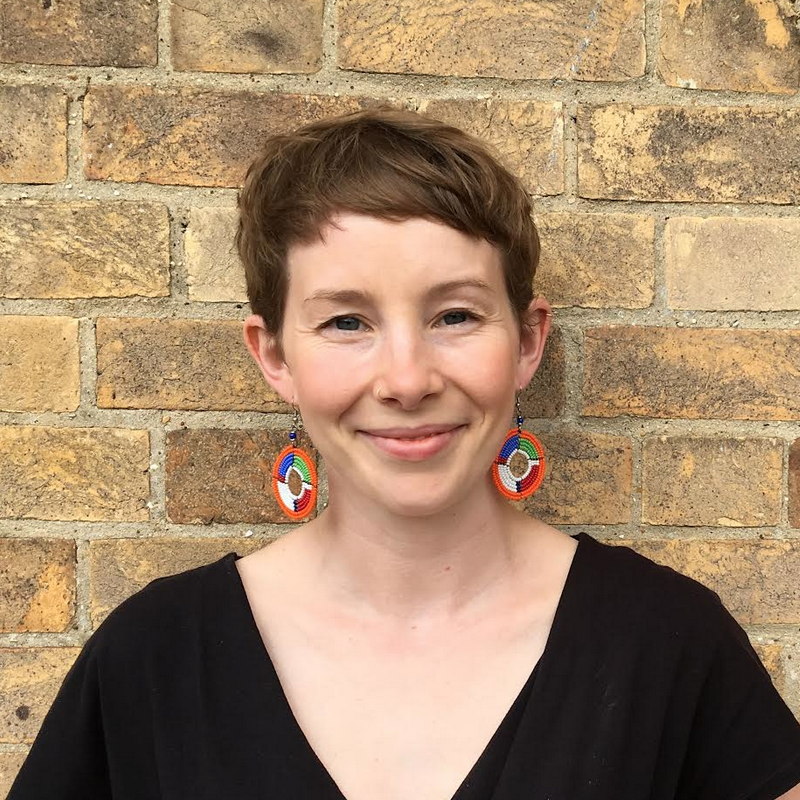
Sarah Abel
Bioética, Estudios Filosóficos y Sociales sobre Ciencia y Tecnología, Filosofía de la Ciencia, Filosofía Feminista- Investigador Titular A
- s.abel@filosoficas.unam.mx
- Tel. 55 5622 7239

Soy especialista en el estudio de los racismos y antirracismos contemporáneos y sus intersecciones con los saberes científicos y las tecnologías genómicas, visuales y digitales. Mi trabajo se sitúa entre los estudios de ciencia y tecnología, los estudios críticos de raza y las epistemologías feministas interseccionales, y se articula alrededor de tres hilos conductores: tecnologías y discursos científicos; cuerpos e identidades; y poder y desigualdades sociales. De modo general, busco entender cómo las tecnologías emergentes llegan a reproducir las estructuras de opresión, y cómo podrían, en cambio, contribuir a las luchas globales e interseccionales por la justicia social.
Cuento con licenciatura en Lenguas Modernas (2007) y maestría en Estudios Latinoamericanos (2012) de la Universidad de Cambridge en Reino Unido. De 2012 a 2015 fui investigadora doctoral Marie Skłodowska-Curie del proyecto EUROTAST (“Exploring the History, Archaeology, and New Genetics of the Transatlantic Slave Trade”, financiado por la European Research Council). Me titulé del doctorado en Antropología Social y Etnología de la EHESS–París con mención honorífica (2016), defendiendo una tesis sobre los usos sociopolíticos de las pruebas genéticas de ancestría en dos sociedades pos-esclavistas: Brasil y Estados Unidos. Los resultados de mi investigación doctoral están publicados en mi primera monografía, Permanent Markers: Race, Ancestry, and the Body After the Genome (University of North Carolina Press, 2022).
Cofundé y fui investigadora posdoctoral (Universidad de Islandia) del proyecto CitiGen (“Identity, Citizenship and Nationhood in the Post-Genome Era”, 2016-19), el cual recibió €1.2m en apoyo de Humanities in the European Research Area. Entre 2017 y 2019 fui integrante de la red de investigación “Circulations et métamorphoses du racisme et de l’antiracisme”, organizada entre la EHESS-París y la Universidad de Kioto. De 2019 a 2024 fui beneficiaria de una British Academy Postdoctoral Fellowship en la Universidad de Cambridge con un proyecto sobre las representaciones del color de la piel en las artes visuales y las ciencias sociales en México. En 2024 me incorporé al Instituto de Investigaciones Filosóficas como Investigadora Titular "A" de Tiempo Completo y en 2026 recibí el reconocimiento de Investigador Nacional Nivel I en el SNII. Mi actual programa de investigación se enfoca en la ética de los generadores de imágenes de inteligencia artificial y su potencial para amplificar formas de opresión epistémica en las sociedades latinoamericanas.
Más allá de mis actividades de investigación, imparto clases en el Posgrado en Filosofía de la Ciencia y el Colegio de Filosofía de la UNAM. entre 2017 y 2023 fui docente en la Universidad de Cambridge, donde dirigí varias tesis de posgrado en Estudios Latinoamericanos y Estudios de Género, y coordiné la asignatura “Race, Racisms, and Antiracisms in Latin America” a nivel de maestría. Desde 2017 colaboro con miembros del Seminario Universitario sobre Racismo y Xenofobia (SURXE) de la UNAM como docente y asesora en el diplomado “Racismo y xenofobia vistos desde México”. He sido ponente invitada en eventos académicos y de divulgación en Reino Unido, Francia, Japón, Alemania, Australia entre otros países y mi trabajo ha aparecido en numerosos programas de radio, podcasts, documentales y artículos de prensa.

Publicaciones más relevantes
Libros
-
Abel, Sarah. Permanent Markers: Race, Ancestry, and the Body after the Genome. Chapel Hill: University of North Carolina Press, 2022.
https://uncpress.org/book/9781469665153/permanent-markers/.
Artículos académicos en revistas arbitradas
-
Abel, Sarah. “Imagination will not be automized: On AI image generators and epistemic oppression”. Constellations (2026). https://doi.org/10.1111/1467-8675.70065.
-
Abel, Sarah. “Objectivity and objectification. On the ethics and epistemologies of ‘skin colour’ measurements in the social sciences”. Studies in History and Philosophy of Science 115 (2026). https://doi.org/10.1016/j.shpsa.2025.102112.
- Romijn, François C., Emma Kowal, Catherine J. Frieman, Anna Källén, Sarah Abel, Shumon Hussain, Sabina Cveček, y Francisco Vergara Silva. "Engaging with palaeogenomics beyond the lab". Anthropology Today 42, núm. 3 (2026): 7–10. https://doi.org/10.1111/1467-8322.70072.
-
Schwartz-Marin, Ernesto, Tayyaba Jiwani, Sarah Abel, Yulia Egorova, Amade M’charek, Diogo Meyer, Andrés Moreno Estrada, Katharina Schramm, Peter Wade, y Michel Naslavsky. 2025. “Genetic ancestry and the colonial legacies of race in genomics: a cross-disciplinary dialogue”. Frontiers in Genetics 15. https://doi.org/10.3389/fgene.2024.1523406.
- Abel, Sarah, y Catherine J. Frieman. “On gene-ealogy: Identity, descent, and affiliation in the era of home DNA testing”. Anthropological Science 131, núm. 1 (2023): 15–25. https://doi.org/10.1537/ase.2210242.
- Abel, Sarah. “Linked descendants: Genetic-genealogical practices and the refusal of ignorance around slavery”. Science, Technology, & Human Values 47, núm. 4 (2022): 726–49. https://doi.org/10.1177/01622439211021656.
- Abel, Sarah. “Bruit statistique ou preuve par la génétique ? L’objectivité ambiguë de l’ancestralité génétique”. Traducido por Cécile Dutheil de la Rochère. Politika, el 7 de marzo de 2022. https://www.politika.io/fr/article/bruit-statistique-ou-preuve-genetique-lobjectivite-ambigue-lancestralite-genetique.
- Abel, Sarah, y Gísli Pálsson. “Dépister l’ancestralité : Machines et techniques généalogiques dans la reconstruction des histoires de famille”. Ethnologie française 2, núm. 178 (2020): 269–84. https://doi.org/10.3917/ethn.202.0269.
- Abel, Sarah, y Hannes Schroeder. “From country marks to DNA markers. The genomic turn in the reconstruction of African identities”. Current Anthropology 61, núm. S22 (2020): S198–209. https://www.journals.uchicago.edu/doi/10.1086/709550.
- Abel, Sarah. “Rethinking the ‘Prejudice of Mark’: Concepts of Race, Ancestry, and Genetics among Brazilian DNA Test-Takers”. ODEERE 5, núm. 10 (2020): 186–221. https://doi.org/10.22481/odeere.v5i10.7181.
- Abel, Sarah. “What DNA can’t tell. Problems with using genetic tests to determine the nationality of migrants”. Anthropology Today 34, núm. 6 (2018): 3–6. https://doi.org/10.1111/1467-8322.12470.
- Abel, Sarah. “Of African descent? Blackness and the concept of origins in cultural perspective”. Genealogy 2, núm. 1 (2018). https://doi.org/10.3390/genealogy2010011.
- Abel, Sarah, y Marcela Sandoval-Velasco. “Crossing disciplinary lines: reconciling social and genomic perspectives on the histories and legacies of the transatlantic trade in enslaved Africans”. New Genetics and Society 35, núm. 2 (2016): 149–85. https://doi.org/10.1080/14636778.2016.1197109.
Capítulos en libros con arbitración por pares
-
Abel, Sarah, y Gísli Pálsson. “Bio-graphies in the broad sense: Narrating the lives and genomes of the enslaved”. En A Comparative Literary History of Modern Slavery: The Atlantic world and beyond. Volume II: Slavery, memory and literature, editado por Mads Anders Baggesgaard, Madeleine Dobie, y Karen-Margrethe Simonsen, 2:112–30. Comparative History of Literatures in European Languages. Amsterdam: John Benjamins, 2025. https://www.jbe-platform.com/content/books/9789027246240-chlel.37.07abe.
- Ortega Domínguez, Abeyamí, y Sarah Abel. “Public Art and the Grammars of Antiracism”. En The New Public Art: Collectivity and Activism in Mexico since the 1970s, editado por Mara Polgovsky Ezcurra, 165–186. Austin: University of Texas Press, 2023. https://doi.org/10.7560/327623.
- Abel, Sarah. “DNA祖先検査は反人種主義に効果的な技術か (Qué tan eficaces son las pruebas ADN de ancestría como tecnologías antirracistas?)”. En 人種主義と反人 種主義 越境と転換 Racisme et antiracisme : Circulations et métamorphoses, editado por Yasuko Takezawa y Jean-Frédéric Schaub. Kyoto: University of Kyoto Press, 2022. https://www.kyoto-up.or.jp/books/9784814003891.html.
- Abel, Sarah. “Lo que los ojos no alcanzan a ver: genómica, color, y cuotas ‘raciales’ en Brasil”. En Educaciones y racismos. Casos y reflexiones, editado por Saúl Velasco Cruz, María de los Ángeles Gómez Gallegos, y Diego Francisco Morales Esquivel, 280–316. Colotlán: Universidad de Guadalajara, Centro Universitario del Norte, Universidad Pedagógica Nacional, 2021. https://www.cunorte.udg.mx/investigacion/publicaciones/educaciones-y-racismos-reflexiones-y-casos.
Capítulos en libros con arbitración por pares
-
Abel, Sarah, y Jada Benn Torres. “Testing the Past”. En Oxford Handbook of Family History and Genealogy, editado por Sara Georgini. Oxford: Oxford University Press (confirmado para publicación en 2027).
- "Juventudes Mexicanas y Tecnologías Digitales Disruptivas: Usos Cotidianos, Críticos y Creativos" (2026-2028). Investigadora principal, en colaboración con Itza Varela Huerta (UAM-X) y Verónica Díaz de León Bermúdez (Ibero-CDMX). Proyecto financiado por la SECIHTI, Convocatoria Nacional de Investigación Científica y Humanística 2026 (Capítulo Ejes Estratégicos: 1. Humanidades Digitales y Ética de la Inteligencia Artificial [IA]).
- “Opresión epistémica e ignorancia sistémica en los generadores de imágenes de inteligencia artificial: hacia una crítica feminista y antirracista” (2024-2026). Investigadora principal. Realizado con apoyos del Subprograma de Incorporación de Jóvenes Académicos de Carrera (SIJA) de la UNAM.
- “From Pigment to Pantone ® : The Science, Art and Politics of Representing Skin Colour in Mexico” (2019-2024). Investigadora principal. University of Cambridge, Centre of Latin American Studies. Proyecto financiado por la British Academy.
- “Identity, Citizenship and Nationhood in the Post-Genome Era” (red CitiGen, 2016- 2019). Cofundadora de la red e investigadora posdoctoral asociada. Universidad de Islandia, Facultad de Ciencias Sociales y Humanas. Proyecto financiado por Humanities in the European Research Area/Horizon 2020.
- “Exploring the History, Archaeology, and New Genetics of the Transatlantic Slave Trade” (red EUROTAST, 2012-2015). Investigadora doctoral Marie Skłodowska-Curie. Centre national de recherches scientifiques (CNRS) y Centre international de recherches sur les esclavages (CIRESC), París. Proyecto financiado por el European Research Council dentro del marco del Seventh Framework Programme de la Union Europea.
Cursos de posgrado
- 2027-1 Filosofía de la Ciencia 1. Posgrado en Filosofía de la Ciencia, UNAM.
- 2026-1 “Ciencias y mitos de la inteligencia: Un recorrido histórico/filosófico de las mutaciones de un concepto”, Seminario de Temas Selectos de Estudios Filosóficos y Sociales sobre Ciencia y Tecnología/Historia de la Ciencia. Posgrado en Filosofía de la Ciencia, UNAM. (Coimpartido con Carlos López Beltrán, Alexis Bedolla y Julián Bohórquez Carvajal)
- 2026-1 Filosofía de la Ciencia 1. Posgrado en Filosofía de la Ciencia, UNAM. (Coimpartido con Guadalupe Mettini y Natalia Carrillo Martínez de la Escalera)
- 2025-1 “Culturas visuales, racialización y ciencias bioantropológicas”, Seminario de Temas Selectos de Estudios Filosóficos y Sociales sobre Ciencia y Tecnología. Posgrado en Filosofía de la Ciencia, UNAM. (Coimpartido con Carlos López Beltrán)
- 2019-2021 "Race, Racisms and Antiracisms in Latin America", Optional Module, MPhil in Latin American Studies, University of Cambridge.
Cursos de licenciatura
- 2026-2 “Racismos y antirracismos en la ciencia: Estudios de vicios y virtudes epistémicos en la producción del conocimiento”, asignatura Problemas de Teoría del Conocimiento y Filosofía de la Ciencia. Colegio de Filosofía, UNAM.
- 2025-2 “Objetividad: entre teoría, práctica y discurso”, asignatura Problemas de Teoría del Conocimiento y Filosofía de la Ciencia. Colegio de Filosofía, UNAM.
Diplomados
-
2026-1 Módulo III, "Creatividad, arte y visualidad", Diplomado en Inteligencia Artificial, IIFs-UNAM.
-
2025-2 “Filosofía de las ciencias particulares: antropología”, Diplomado en Problemas Filosóficos de las Ciencias, IIFs-UNAM.
-
2025-presente "Racismo e IA" (cápsula de video), Diplomado: Racismo y xenofobia vistos desde México, SURXE-UNAM.
-
2021-presente “Los usos sociopolíticos de los estudios genéticos” (cápsula de video), Diplomado: Racismo y xenofobia vistos desde México, SURXE-UNAM.
Ponencias y entrevistas
- Ponencia. “Opresión epistémica, ignorancia e imaginación en los generadores de imágenes de IA”, Seminario de Investigadores. IIFs-UNAM, 21 de mayo de 2025. https://www.youtube.com/watch?v=GCJA6SWVcaI.
- Presentación de libro. "Permanent Markers (con participación de Vivette García Deister y Carlos López Beltrán)", SURXE e IIFs-UNAM, 6 de septiembre de 2024. https://www.youtube.com/watch?v=ksVApEg-Nc4.
- Ponencia invitada. “Genética y antirracismos: una perspectiva desde las ciencias sociales”, Conversatorios sobre “raza”, racismo y antropología biológica, con Francisco Vergara Silva. UNAM-CEIICH, 16 de mayo de 2023. https://www.youtube.com/live/e6UJOZj-KP4.
- Ponencia invitada. “Tomándole la medida al racismo: las tecnologías de color de piel y sus efectos, de las encuestas socioeconómicas a los discursos sociales”, Seminario Investigación y un cafecito. CIESAS-CDMX, 30 de marzo de 2023. https://www.facebook.com/ciesas.oficial/videos/239166598483561
- Podcast. “Permanent Markers: Race, Ancestry, and the Body After the Genome”, New Books Network, con Reighan Gillam. 29 de noviembre de 2022. https://newbooksnetwork.com/permanent-markers.
- Podcast. “Special Episode: Caroline Schuster, Sarah Abel and Catherine Frieman on The Archaeology of F*****g”, The Familiar Strange, con Alexander D’Aloia. 9 de Agosto de 2021. https://thefamiliarstrange.com/2021/08/09/archaeology-of-fing.
- Documental. DNA: Quem São Seus Pais, dir. Jonas Santana y Xavier Thaislane (Escola de Comunicações e Artes, Universidade de São Paulo). 27 de julio de 2021. https://www.youtube.com/watch?v=Ce0088AFSIE.
Artículos
- Abel, Sarah. 2026. “Tecnopolítica de la IA: inteligencia, ignorancia e imaginación. Parte II”. Revista Común (2026). https://revistacomun.com/blog/tecnopolitica-de-la-ia-inteligencia-ignorancia-e-imaginacion-ii/.
- Abel, Sarah. “Tecnopolítica de la IA: inteligencia, ignorancia e imaginación. Parte I”. Revista Común (2026). https://revistacomun.com/blog/tecnopolitica-de-la-ia-inteligencia-ignorancia-e-imaginacion/.


 Oct 12 de 2026
 Aviso de privacidad
 Circuito Maestro Mario de la Cueva s/n, Ciudad Universitaria, C.P. 04510, Coyoacán México, CDMX